
Research Grants for the Documentation of Oral Literature and Traditional Ecological Knowledge
In the service of Indigenous Peoples in their efforts to record their arts and sciences
Who We Are
Firebird Foundation for Anthropological Research honors the legacy of our founders, George and Laura Appell, and supports efforts that contribute broadly to culture, language, and the environment for the betterment of humanity. Of particular interest are efforts that focus on preserving the environment, supporting the arts, sciences, and humanities, and supporting efforts that contribute to the preservation of the dignity of all peoples.
Learn about our Firebird Foundation Research Grants, the Firebird Foundation Supplemental Research Grant and the Laura W. R. and George N. Appell Grant below.
Explore our other Firebird Foundation Projects, Sabah Oral Literature Project, Bhutan Oral Literature Project, and The Collections and Archives.
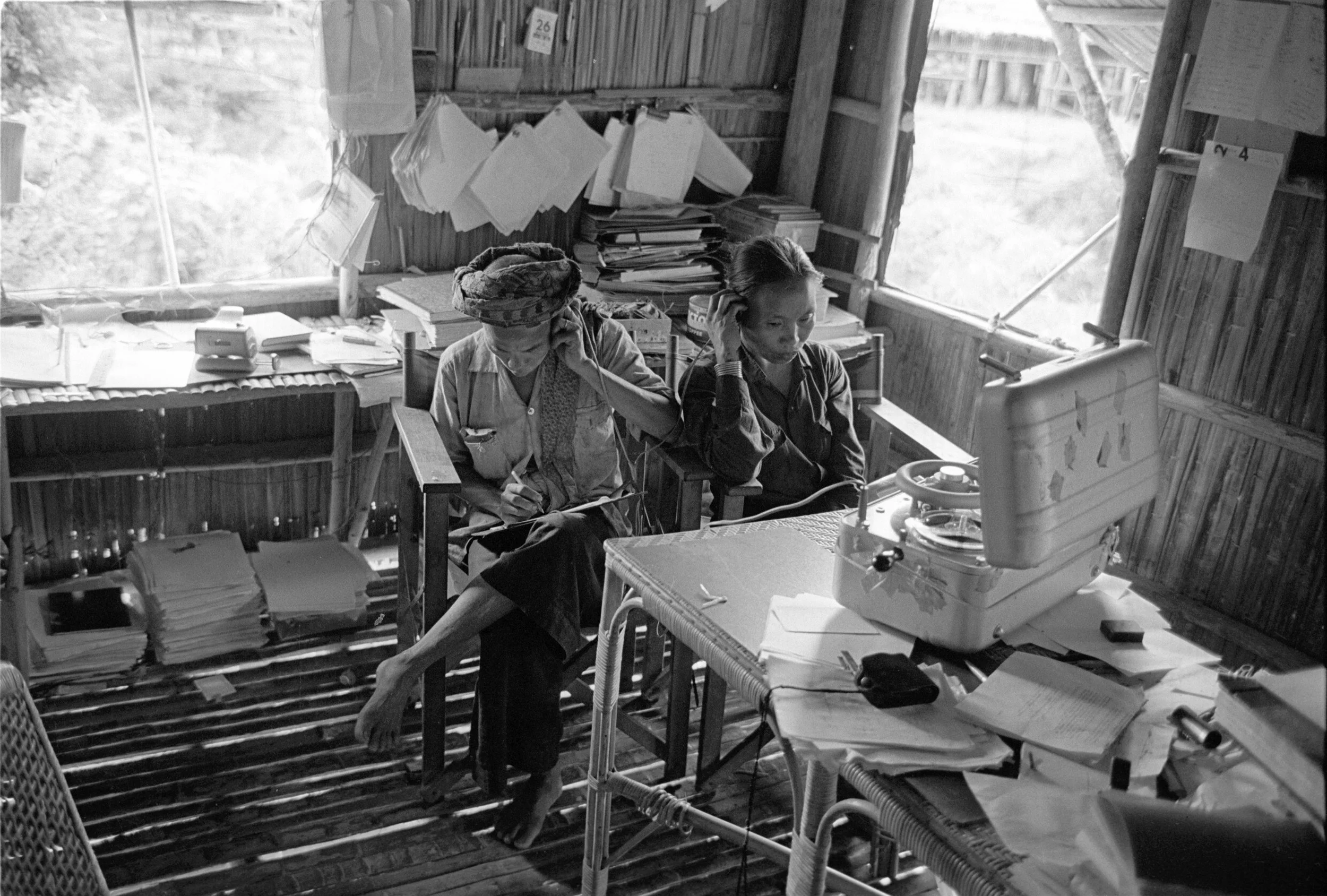
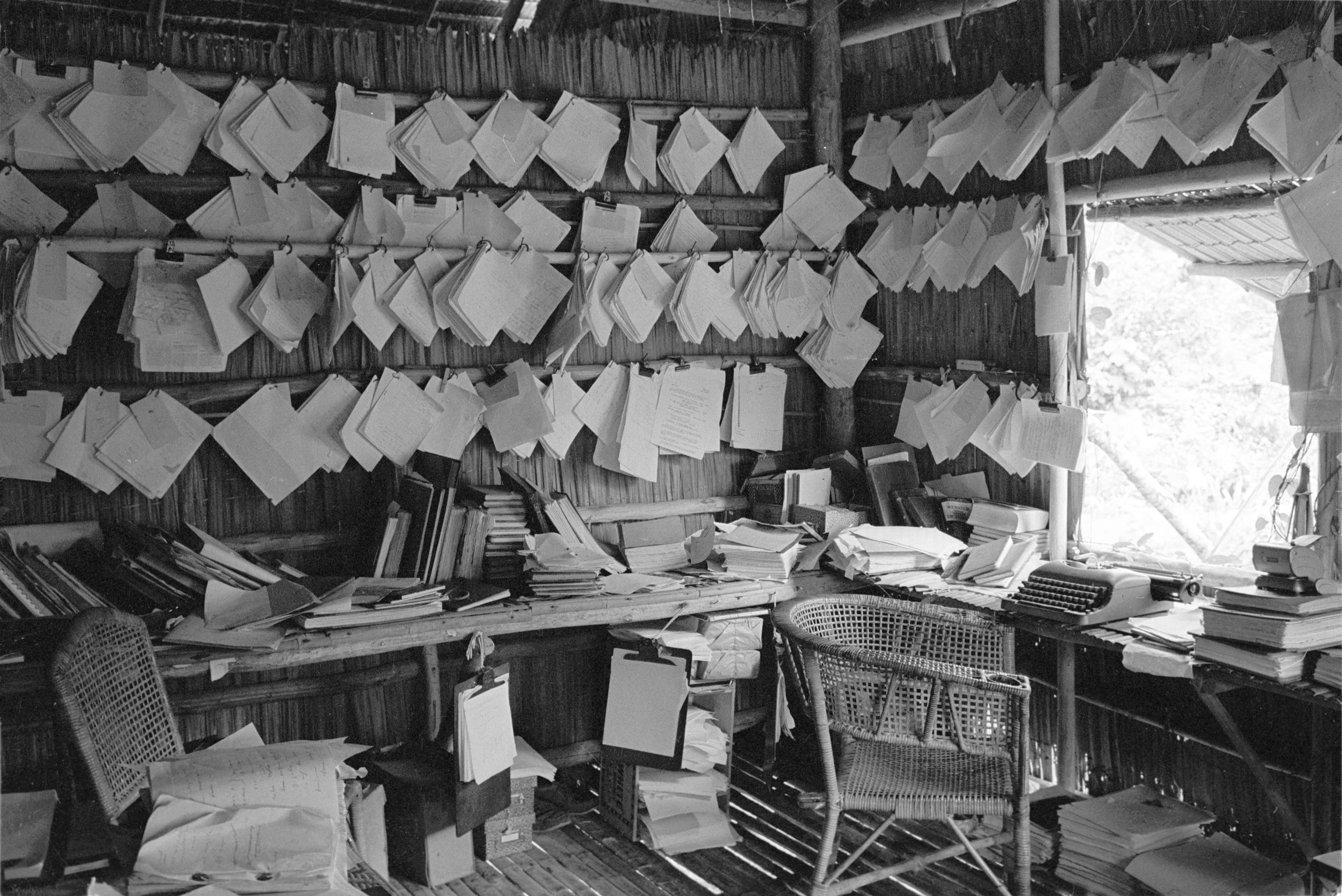
George N. Appell’s Field Office, 1959 - 1963.
The application period for the June 15 review cycle has concluded. We are no longer accepting new submissions. We encourage you to apply for our next cycle, January 1 until January 15, 2027.
Please note that we are now in the process of accounting for and processing all application materials received — close to 100 project applications in all! We appreciate your patience as we consider each application. We will make every effort to update you on the status of your application by August 31.
We Offer Two Grants that Support Field Research in Oral Literature
The unique oral literatures of Indigenous peoples are rapidly being lost through the death of traditional practitioners and through the modernization of the next generation. The Program for Oral Literature of the Firebird Foundation for Anthropological Research has initiated a project to fund the collection of this body of rapidly disappearing literature.
This literature may consist of ritual texts, curative chants, epic poems, musical genres, folk tales, songs, myths, legends, historical accounts, life history narratives, word games, and so on.
The following research grants below are available to anthropologists and linguists going into the field to support a collection of oral literature.
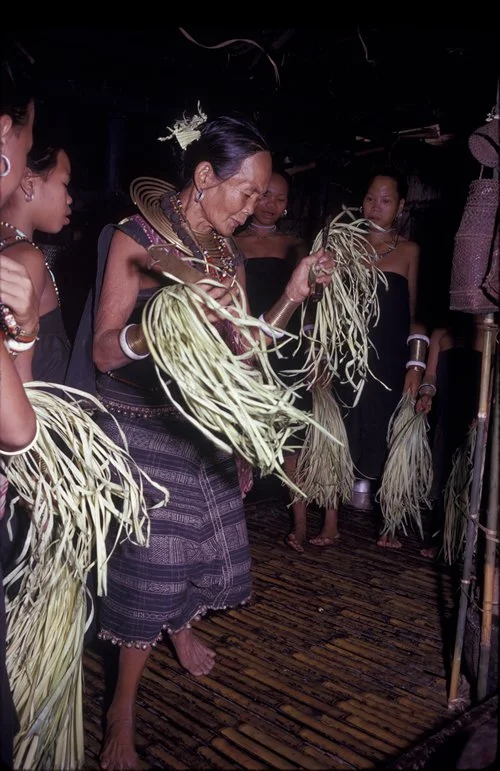
Priestess/Spirit Medium in Trance Dance.
Your Grant Questions, Answered
-
It is the spoken, sung, or performed cultural expressions passed down through generations in societies without writing. Our website features multiple articles on oral literature, including the Nature and Function of Oral Literature.
-
We accept applications from anthropologists, linguists, other scholars, and community members. Applications are considered without discrimination based on ethnicity, national origin, residence, religion, sex, or gender. Educational level is not a factor. Preference is given to community-based, long-term projects that train local participants to continue documenting oral literature.
-
Firebird Research Supplemental Grant: Supports research on oral literature and traditional ecological knowledge. It may supplement a larger project or support a stand-alone study. This grant requires researchers to live in the community for 9 - 12 months.
Laura W. R. Appell and George N. Appell Research Grant: Supports long-term, community-based programs designed to become self-sustaining. This grant requires researchers to live in the community for at least 2 -3 years.
-
The primary purpose of the Firebird Foundation Supplemental Research Grant is to supplement other funding sources, such as a larger research grant. This grant ensures researchers prioritize the collection of oral literature and traditional ecological knowledge within a broader research project. Researchers are expected to live in a community for 9 to 12 months to document a wide range of oral literature in the community, not just the obvious, more public types of oral literature.
The primary purpose of the Laura W.R. Appell and George N. Appell Research Grant is to establish a long-term, community-based program similar to the Sabah Oral Literature Project. This grant is different from the Supplemental Research Grant. It is not simply a larger research grant. This grant is intended for researchers who share the philosophy and vision of the Firebird Foundation Founders and who demonstrate a long-term commitment to a community and a vision for long-term community engagement. Applicants must review the materials on our website, especially those related to the Sabah Oral Literature Project. Applicants are also encouraged to review the Bhutan Oral Literature Project website to understand similar work. To begin the process, submit a short inquiry form. If the inquiry is approved, you will be invited to submit a full application for consideration. Only 1–2 Laura W.R. Appell and George N. Appell Research Grant grants are awarded each year.
-
All letters of recommendation must come directly to Firebird Foundation from the recommender. Email PDF files to firebird@firebirdfoundation.org. Please include applicant’s name in email’s subject heading.
Letters included in the application packet will disqualify your application.
Letters of recommendation from team members listed on the application, or from someone currently engaged in research under the auspices of the Firebird, or on any current application for funding, will also disqualify your application.
-
Funds support research on disappearing oral literature and traditional ecological knowledge. Grants may not be used for publishing costs, incidental expenses, postage, or personal needs. Funds are not provided for tuition, travel to conferences, or institutional support. Exceptions are rare.
-
No. You may be listed on only one active grant application at a time, whether as a primary researcher or team member.
-
No. You are not eligible for another Firebird Foundation Supplemental Research Grant until your final report and budget have been submitted and approved.
-
Applications are reviewed twice each year, with deadlines on January 15 and June 15. Submission windows open two weeks prior to each deadline (January 1 and June 1). Applications submitted outside these periods will not be considered.
Applicants will receive a confirmation email upon submission. Funding decisions are made within three months of the deadline. Please do not inquire about your application status before March 31 or August 31, when each review cycle concludes.
-
Yes. Indirect costs are capped at 3% and must be directly attributable to project administration.
We believe that good stewardship of resources is essential in order to support the work of preserving the rapidly disappearing oral traditions in the world and to support the well-being of indigenous peoples.
The spirit of this policy is thus to pay only for expenses that are directly attributable to project outcomes and outputs as direct costs. Direct costs are defined as the expenses required to execute a grant that are directly attributable and can be reasonably allocated to the project.
-
The Firebird Foundation for Anthropology Research expects grant applications to be the applicant’s own work. At the same time, it recognizes that artificial intelligence (AI) is widely used and can be a valuable research tool, and encourages its responsible use. Applicants should ensure that any use of AI supports originality, ethical standards, and the protection of research communities’ intellectual property.
In line with other grant-making and scholarly organizations, Firebird Foundation requires transparency in AI use. Applicants must disclose whether they used AI, which tools were used, and how they were used. For further guidance, applicants may consult the Wenner-Gren Foundation AI Policy and the Wiley Publishing Guide on using AI in your work.
-
We require an itemized budget showing how grant funds will be used. All costs should be based on current prices and listed separately. Applications will be disqualified if expenses are not itemized, if costs are not based on current prices, or if the requested amount is not clearly explained in the budget.
-
Please provide an itemized budget showing how grant funds will be used. All costs should be based on current prices and listed separately. Applications will be disqualified if expenses are not itemized, if costs are not based on current prices, or if the requested amount is not clearly explained in the budget.
Incomplete applications or those that do not follow guidelines are not reviewed.
Missing materials must be submitted immediately after notification.
References must be submitted directly by the referee, or the application will be invalid.
-
Contact the Foundation at firebird@firebirdfoundation.org for approval before making changes. Requests are generally approved if reasonable and justified, but must be formally authorized.
Explore Other Firebird Foundation Projects
Sabah Oral Literature Project
Carrying forward the original research work of George N. and Laura W. R. Appell. Meet the present team, and learn more here.
Bhutan Oral Literature Project
A unique, community-based, intangible cultural heritage project dedicated to preserving the rich and diverse linguistic, ethnographic, and environmental wisdom embedded in the Bhutanese language and cultural traditions. Learn more here.
The Collections and Archives
The Firebird Foundation Collections and Archives houses the Appell material culture collections from Sabah, Malaysia collected between 1959 and 2004, and from Kalimantan, Indonesia, collected in 1980 and 1981, and the Appell anthropological papers—both physical and digital. Also housed at the Foundation are the donated archives of other anthropologists whose main focus of research was Borneo. The archived research data and reports of the recipients of the Firebird Foundation for Anthropological Research Grants are also housed in the Collections and Archives. Learn more here.